Voices outside Academia

Seeing the political through the eyes of those who cross the sea

13 October 2026

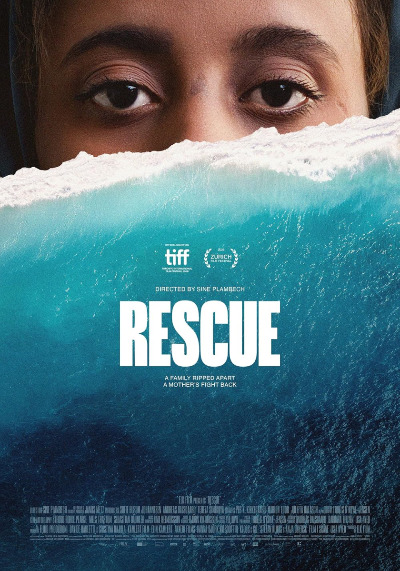
On a dead-calm morning in the Mediterranean, the migrant rescue ship of Doctors Without Borders spots a deflating rubber boat. Dozens of people are struggling in the water. Among the refugees is Roro, a Yemeni mother travelling with her husband, Hani, their two-month-old baby, and two young sons. This is the opening scene of my film Rescue. As the rescue begins, a Libyan militia intervenes and abducts Roro and the children, dragging them back to Libya. Meanwhile, Hani is rescued and arrives in Europe alone. A family is violently torn apart across the Mediterranean.

While Hani fights from Europe to reunite the family, Roro struggles to survive captivity in Libya and to protect her children. Trapped by a violent system deeply entangled with EU border politics, she relentlessly attempts to cross the sea again. The story of Roro and Hani illustrates how migration policies are experienced not simply as laws and procedures but as forces that shape families, relationships and individual lives, reaching into the most intimate spheres. It is a story of family, loss, resilience, dignity and the struggle to be seen.

I work as a migration researcher and film director, and I often find that documentaries offer something different from research in writing: an immediate and human perspective—a feeling behind the data, making complex political processes visible and accessible to broader audiences.

The European Union’s approach to migration increasingly involves the externalisation of border control, with North African countries being paid to prevent migrants from reaching Europe. At the same time, rescue operations in the Mediterranean have become the subject of political conflict and criminalisation. The result is overcrowded boats carrying children and families encountering dangerous conditions, while organisations and individuals attempting to save lives can themselves face political and legal pressure. These are processes that can be complicated to document as a film team, since places, time and access continually change. One powerful tool is self-documentation, which gives migrants greater agency in how their experiences are represented.

In RESCUE, Roro decides to secretly record her captivity in Libya, using a phone hidden in her baby’s diaper, thereby providing an intimate account of conditions that might otherwise remain unseen. This footage is seen through the eyes of a woman. Such personal footage can contribute valuable qualitative evidence to migration research by documenting experiences from the perspective of those who are directly affected. These choices inevitably shape the audience’s understanding of events. Researchers and filmmakers must therefore approach such documentary material critically, considering questions of representation, ethics, consent and context.

Nevertheless, documentaries can bridge the gap between research and public understanding. They can translate abstract concepts such as border externalisation, deterrence and asylum policy into stories that audiences can emotionally understand. In doing so, they encourage viewers to consider what European societies are actually funding and producing at their borders. Ultimately, the contribution of documentaries to migration research lies in their ability to connect political structures with human experiences.

Sine Plambech (This email address is being protected from spambots. You need JavaScript enabled to view it.) is an anthropologist, film director and author whose work examines the intersections of migration, gender and transnational mobility. As a researcher, she has conducted extensive fieldwork across Southeast Asia, West Africa and Europe, focusing on women’s migration trajectories, human trafficking economies and the social infrastructures that sustain mobility. Her scholarship combines ethnographic depth with a critical analysis of global inequalities, illuminating how migration is shaped by intimate relations, labour markets and geopolitical forces. Plambech is also an accomplished documentary filmmaker, using visual storytelling to expand public understanding of migration beyond policy narratives. Her films explore the lived experiences of migrants and the emotional, economic and political dimensions of their journeys. This dual engagement with academia and film allows her to reach diverse audiences and challenge dominant representations of mobility. Her publications and films have contributed to international debates on gendered migration, humanitarian governance and the politics of return. Through her interdisciplinary work, Plambech has become a leading voice in rethinking how migration is studied, narrated and governed, bridging research, artistic practice and public engagement.

Watch the trailer here!

In this Bulletin

#16 - IMISCOE Forum in Agadir

Welcome to the 16th edition of the IMISCOE Bulletin!

We are pleased to share the 16th edition of the IMISCOE Bulletin, bringing together the latest news,...

Editorial
Ethical Recruitment and Migrant Rights in the UK and the Gulf: The Limits of Soft Law

Every year, millions of workers cross borders through systems built on a convenient fiction: that voluntary...

A chat with
The hosts of the IMISCOE Forum 2026 in Agadir

Could you tell us a few words about the institutions and colleagues involved in the organisation of the 2026...

In the Spotlight
West University of Timișoara (UVT)

West University of Timișoara (UVT) is a comprehensive public university with twelve faculties. It is the main...

In the Spotlight
The Observatory of Migration (Observatório das Migrações)

The Observatory of Migration (OM) is Portugal’s national centre for research and policy support on...

IMISCOE Research Activities
News from IMISCOE Standing Committees

SC Families, Welfare, Care and the Life Course SC FamWeLC is a relatively new group within IMISCOE...

Voices outside Academia
Seeing the political through the eyes of those who cross the sea

On a dead-calm morning in the Mediterranean, the migrant rescue ship of Doctors Without Borders spots a...

PhD Network
Keep in Touch with the IMISCOE PhD Network

Since the last Bulletin, the PhD Network has worked towards the Annual Conference and through to the end of...

PhD Academy
Finding Balance in an Unbalanced System: Work and Life During the PhD Journey

On 12 June 2026, the Training Committee hosted a PhD Academy workshop entitled Finding Balance in an...

Updates on the IMISCOE Book Series

IMISCOE, the world's largest network focusing on migration and diversity, is proud to have an official book...

IMISCOE Migration Podcast
What is new on the IMISCOE Migration Podcast?

The IMISCOE Migration Podcast continues its Season 6 with three new episodes that question how migration is...