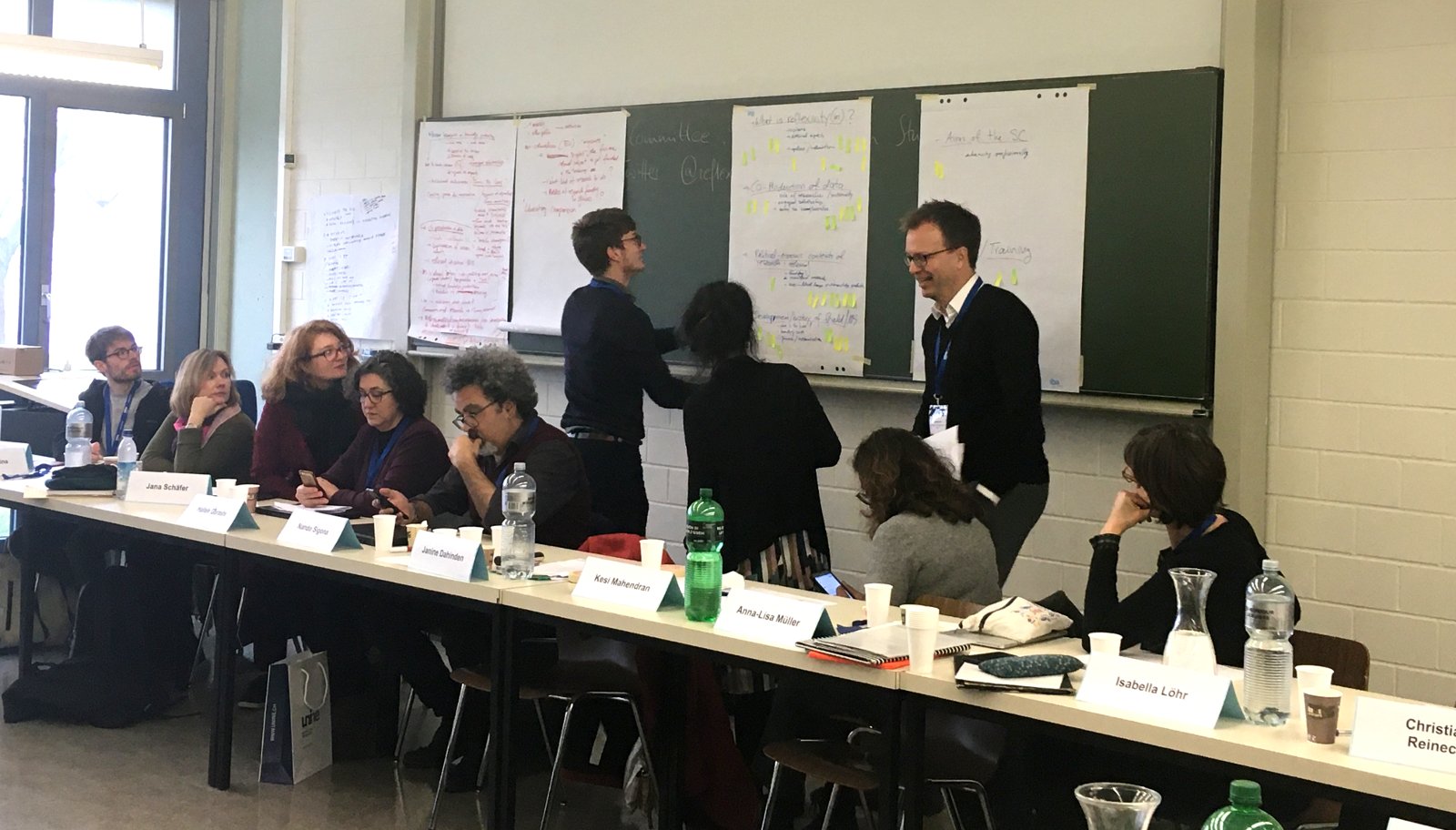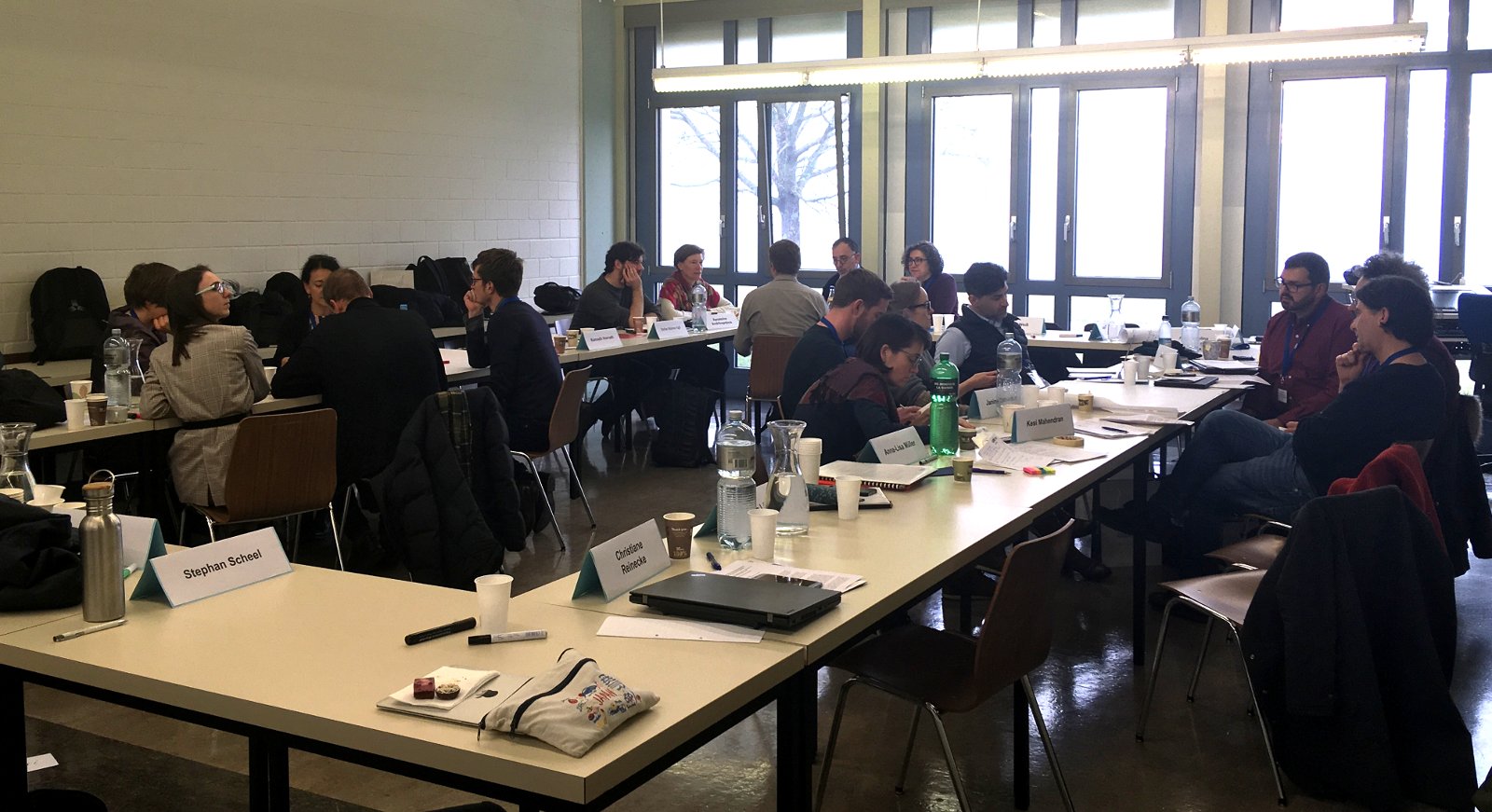
On 24 January, 2020, 34 migration researchers from all over Europe gathered in Neuchâtel, Switzerland, for the kickoff-workshop of IMISCOE’s Standing Committee “Reflexive Migration Studies”. The objective of the workshop was not only to get to know each other and to discuss reflexively on migration, but of utmost importance was also to come up with the Standing Committee’s agenda for the upcoming years.
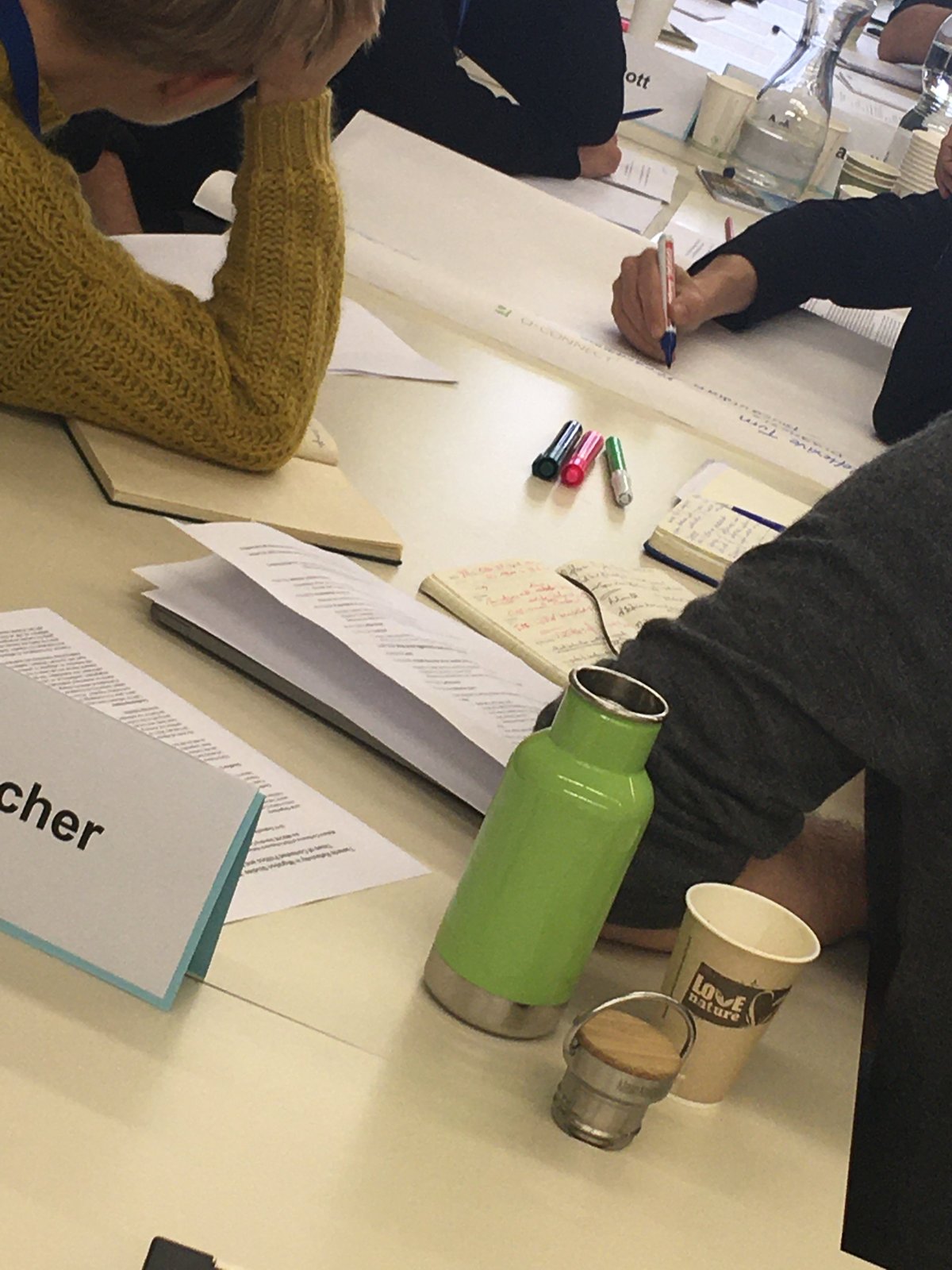
Discussions in the plenum, group work and world café discussions were the methods we used in order to create innovate discussions and to come up with important issues (the photos below picture the lively working atmosphere).
The intense discussions highlighted that two questions currently bother migration scholars most: (1) How can a reflexive perspective be integrated (and realized) in both theoretical and empirical migration studies? (2) How do we – as scholars who are aware of the constructive and exclusionary nature of categories and concepts – nonetheless create and use categories, e.g. of migration and migrants, in our empirical and theoretical work?
Thus, the workshop’s discussions brought up four topics in particular which we identified as key issues for future migration studies:
- Reflexivity as term and concept
- Data production and usage
- Political-economic context of research and reflexivity
- Historical development of the field of migration studies
These topics address reflexivities in migration studies on very different levels: thinking about the nature of reflexivity poses epistemological questions which are of high relevance to all disciplines within the field of migration studies as well as to the individual researchers and their work and to project designs. Teaching and training was here seen as particular important field where reflexive approaches need to be strengthened. Reflecting upon data production (by whom? with whom? through what kind of instruments? …) and data usage is at the heart of all empirical projects. Co-production of knowledge and engaged scholarship could preset new avenues in this field. Considering the political-economic context of migration-related research addresses the broader societal and institutional context in which research and practice are situated and the challenges they pose to reflexivity. The neoliberalisation of Universities as much as contingencies and dependencies regarding commissioned research are two examples. Regarding the historical development of the field of migration research all related disciplines ask for a critical appraisal of established approaches, perspectives, scientific and ethical norms within and across disciplines.
With the intellectually inspiring drive from this first collaborative meeting, the Standing Committee “Reflexivities in Migration Studies”’ work now starts for real. We are looking forward to critically work on these and more topics in the years to come.
Stay tuned on this website and on twitter (@reflex_studies) – and you can contact us directly via