
This post is part of the blog series titled Visions for migration, published by the Standing Committee Reflexivities in Migration Studies (SC REFLEX), and edited by Sorina Carstea, Iva Dodevska, Stefan Manser-Egli and Anna-Lisa Müller. The series discusses the question: how does who we are shape how we do migration research, and what kind of world do we hope our research can contribute towards? Find the introduction to the series here.
Author: CLAYKIN
When I submitted my thesis—written in English and focused on SWANA (Southwest Asia and North Africa) migrant musicians in Rome—I dedicated it to my mother tongue. To Persian. I imagined taking its hand and holding it gently. A living language, a living body, still breathing despite historical upheavals. Persian is the language in which I inhabit my own mind. Even when I speak to my partner—the person with whom I share a life and love—I translate myself from that language first.
In my mother tongue, I am thirty-two years old.
In English, I am in my twenties.
In Italian, I am a teenager.
My intellectual footing shifts with each language. Multilingualism operates as a temporal and embodied condition, not only a communicative skill .Each language carries a different age of the self. An accent survives translation. It lingers in the mouth, in the cadence of certain syllables—a slight unevenness that refuses disappearance.
There is a quiet beauty in this. The small miracle of saying thank you or goodbye in your mother tongue at a neighborhood supermarket before returning to an ordinary day. Living between languages has opened doors for me: friendships, solidarities, encounters that might otherwise never have taken place.
That beauty, however, has never existed without constraint. I come from Iran, a country that rarely hosts foreign tourists—particularly in recent years. To connect to the wider world, one often relies on VPNs to access social media platforms filtered or blocked by the state. Participation in the global conversation is neither stable nor guaranteed.
For me, migration has meant holding both sides of a coin at once. In many wounds there is possibility—though not in all of them.
Before speaking of possibility, I must speak of the body.
In Iran, I was detained twice by the morality police—once at seventeen, again in my twenties. My “offense” was the way I was dressed. Afterward, I learned to dress so I would not be arrested. I learned to speak so I would not be censored. Most importantly, I learned to regulate my breathing so it would not be cut short.
These were not choices. They were techniques of survival.
This story belongs to roughly a decade ago. Three years ago, following the death of Mahsa (Jina) Amini in police custody, a movement emerged under the name “Woman, Life, Freedom.” Violent repression followed, and many lives were lost. Still, something shifted.
Over the past three years, increasing numbers of women have appeared in public without compulsory hijab. Even after the killings, fear has loosened. The face of Tehran— and of many other cities I have known and lived in—appears markedly different from what it was four years ago. By reclaiming agency over something seemingly ordinary, such as the choice of how to dress, women have altered the texture of the city itself. The act remains illegal. It persists nonetheless.
The phrase “colonized female body” may sound theoretical, yet for me it names something lived—something shared by many whose bodies have been sites of regulation. Power shapes more than thought; it disciplines posture, voice, movement. At times, the authority governing the body is not distant. It speaks your language. It claims protection. It calls itself your own.
When I migrated to Europe, I believed I had left that regulated self behind. The body, however, retains its archives. Even in freer spaces, I sometimes lower my voice without noticing. I continue to calculate—instinctively—how much of myself can be revealed. Migration shifted my geography; it did not erase the political history sedimented in muscle and breath.
Iran remains part of my body, part of my being. With due respect to cosmopolitan ideals, departure has never meant severance. One of my feet remains there deliberately, and I intend to keep it so. Like a mother whose child is troubled—even problematic—can one truly doubt the love she carries for that child?
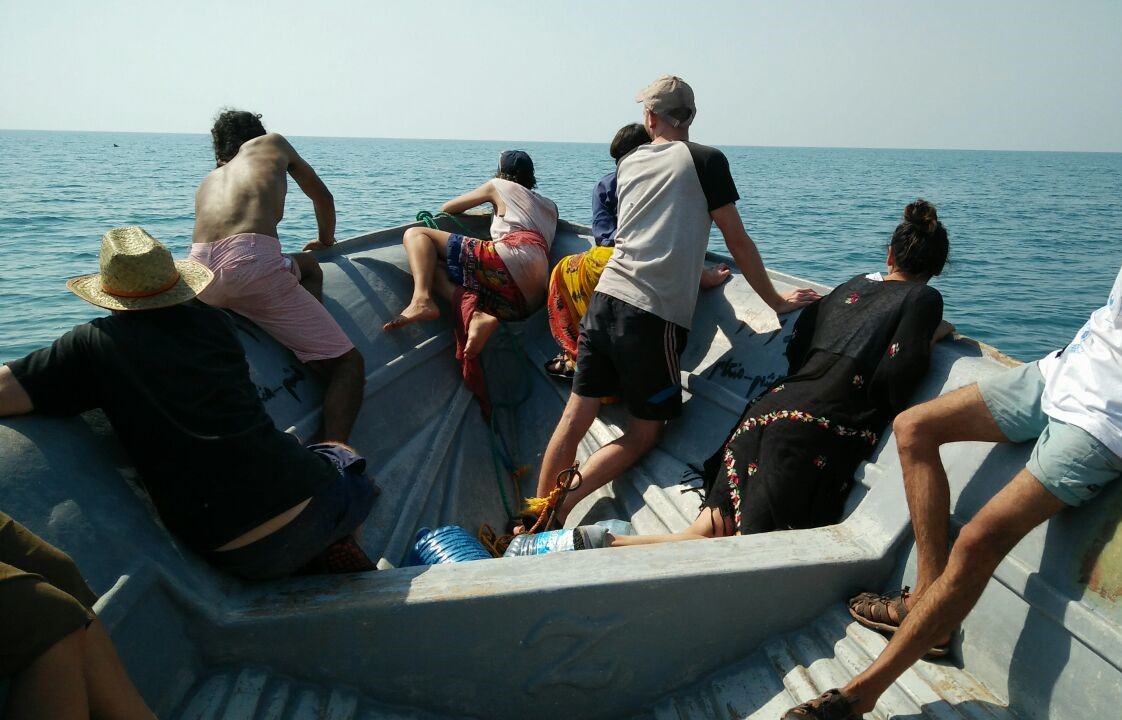
Gradually, I began to sense something else. The European host society I had entered also had a body—a social one. Not abstract, but palpable. It tightens under pressure and loosens in moments of ease. It carries histories of fear, protection, loss, and change. These tensions are real. They are lived.
I once imagined that I, as the migrant, was the only wounded presence in this encounter. Over time, I came to understand that migration is not the movement of fragile individuals into stable societies. It is an encounter between embodied histories—each shaped by distinct memories of order and disruption, each carrying its own vulnerabilities.
This understanding became concrete in early January 2026, when the country I had left descended into digital silence.
Protests erupted. The internet was shut down. People were killed in their own streets. Phone calls stopped. Messages disappeared. There were no signs of life.
I had accepted migration under one condition: connection.
The ability to hear my mother’s voice with a single call. The possibility of noticing a new wrinkle on my father’s face through a video call. Distance was bearable because connection existed.
When the internet was cut, that fragile bridge collapsed.
How is it possible for your mother to be alive and yet unreachable?
Migration scholarship has long emphasized transnational ties and digital intimacy—the ways technology sustains families across distance. Such analyses often presume continuity: that signals will pass, that connection will remain available. Connection is frequently described as the bridge sustaining diasporic life—and often it does. Bridges, however, collapse. When they do, migrants experience a double rupture: separation from the country left behind and from the illusion of proximity technology once promised.
Documentation from the Access Now #KeepItOn campaign shows how internet shutdowns have become routine instruments of political control. For migrants, these disruptions are not abstract policy decisions; they sever emotional arteries. They transform stretched relationships into imposed silence.
During that month, I searched for hidden meaning in the pain. I did not find one. Not every wound contains a gift. Some accumulate quietly within the body and demand time.
Migration is rarely undertaken without reason. Few detach themselves from their linguistic and social fabric without structures of insecurity—political, economic, gendered, or existential.
In that silence, I returned to language. I immersed myself in Beyond Memory: An Anthology of Contemporary Arab American Creative Nonfiction, edited by Pauline Kaldas and Khaled Mattawa. Its Persian translation bears the title Accents Cannot Be Domesticated. The phrase felt exact. Accents are among the last, beautiful resistances of the mother tongue—a reminder that belonging remains unfinished and open.
Gradually, migration appeared less as a question of “integration” and more as a space for understanding relationships.
If research became a balm, it was not because it healed the past, but because it made shared understanding possible. Pain is not merely individual; it takes shape within relationships, and within those same relationships it can soften. A migrant does not enter a finished world; she enters a society that is itself still becoming.
My current research on SWANA diasporic musicians in Rome brings this into view. For them, music exceeds artistic production; it becomes shared breath—a site where roots are neither denied nor frozen, but placed in dialogue. Hybrid identities here are not problems to be solved; they are rehearsals of coexistence—imperfect, ongoing, alive.
From this vantage point, migration and diaspora studies are not merely academic fields; they function as practices of care. They hold space for migrant lives to be told and understood in their complexity. At the same time, they create an opening for receiving societies—a pause in which to encounter themselves through other experiences.
What matters to me is less a vision for the world than a disciplined attentiveness to it—less a program than a way of seeing. Migration is not rupture alone; it is one of the conditions through which contemporary life unfolds.
In this sense, we live in societies whose boundaries and certainties have grown increasingly fluid, where connection and disconnection, belonging and estrangement, stability and rupture coexist in unstable equilibrium. Those who move across borders do not arrive empty-handed. They carry continuities—voices, attachments, unfinished ties—into landscapes that are themselves unsettled.
Movement is one of the ordinary forms through which we live together in a changing world. The right to connection—the simple ability to hear your mother’s voice in the midst of political crisis—belongs within the realm of human dignity, rather than existing as a fragile privilege contingent on geopolitical stability.
Beyond this lies a quieter recognition. Structural pressures, economic inequalities, and geopolitical entanglements weigh unevenly on ordinary lives. Under different conditions, migration might sometimes be chosen as expansion rather than endured as necessity.
As I write these words, military ships from several global powers have been present for days in the waters near the southern coast of my country. Their presence is a reminder that even in an age described as fluid, the infrastructures shaping movement—digital, political, military—can harden abruptly. Migration never unfolds in a vacuum. It takes shape within forces larger than any single biography, forces that complicate the choices to stay, to leave, and to remain connected across distance.
Bio: This post is published under a pseudonym at the request of the authors. The author's identity is known to the series editors.