
This post is part of the blog series titled Visions for migration, published by the Standing Committee Reflexivities in Migration Studies (SC REFLEX), and edited by Sorina Carstea, Iva Dodevska, Stefan Manser-Egli and Anna-Lisa Müller. The series discusses the question: how does who we are shape how we do migration research, and what kind of world do we hope our research can contribute towards? Find the introduction to the series here.
Author: AMAL HLIOUI
I am ashamed of myself.
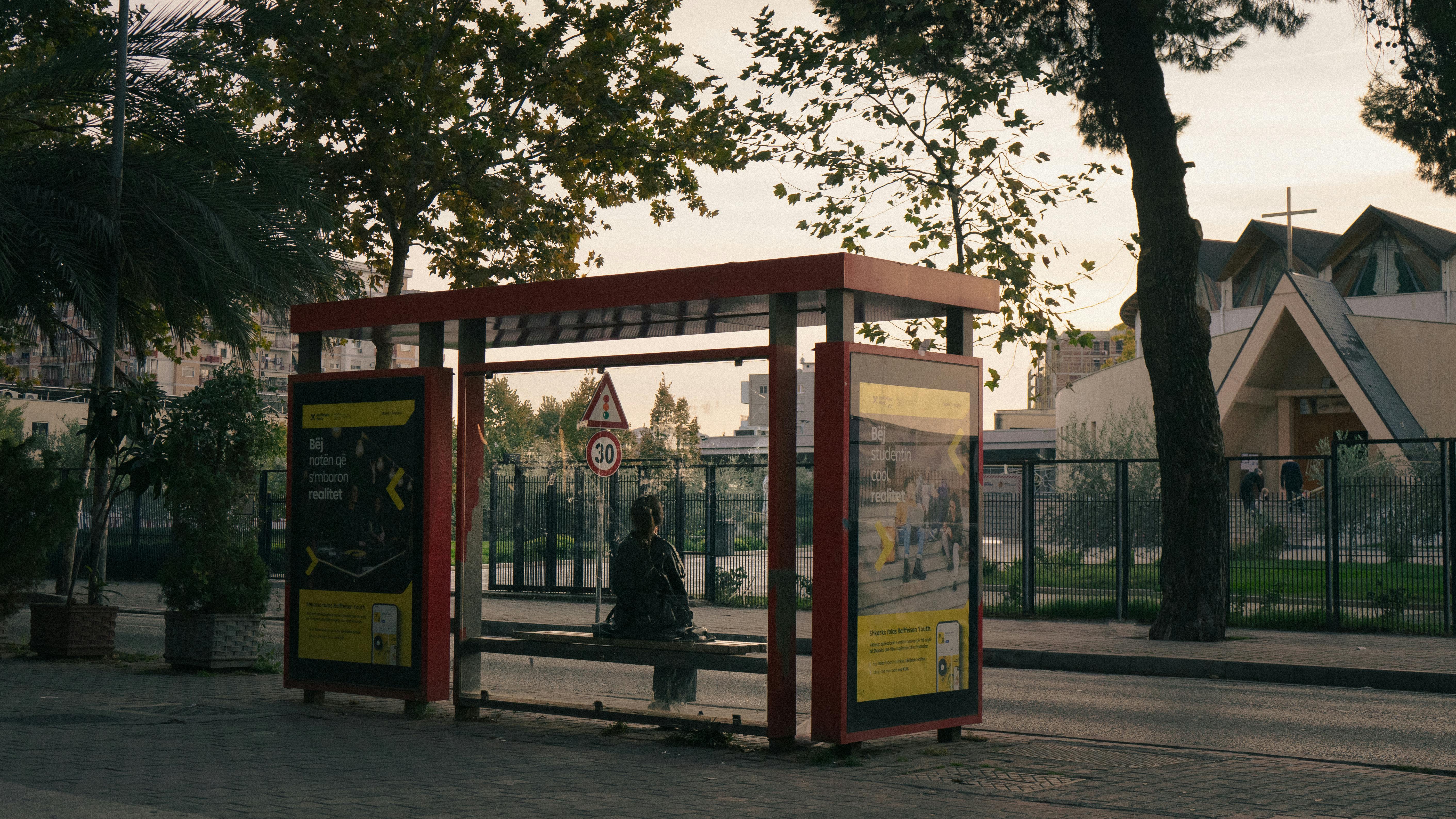
Ashamed for not being discriminated against. Ashamed for not being spat at at the 109 bus station in front of the university, just like the sub-Saharan woman standing next to me.
Ashamed that I could easily slide into the Marina café without being scanned by the security guards’ suspicious eyes, while my veiled friend was held in that familiar pause – that pause where one’s body is evaluated before being granted access.
Ashamed that I did not realize I was seen as European. Ashamed that I have “the face of a French woman,” as my Italian landowner once told me with a smile meant as a compliment.
Ashamed that I did not look Arab. Did not look Muslim. That I evaded categorization.
Ashamed that when I had to explain myself, I would say: I am Tunisian – but not just any Tunisian. An educated university teacher. Not one of “those” Tunisians in Palermo.
That is where this reflection begins: with shame. And with the uneasy realization that what protected me was not innocence, but proximity to whiteness.
Passing as Protection
The concept of passing has a long and painful history. It refers to the ability of someone from a marginalized group to be perceived as belonging to a dominant one, often for safety or survival.
In my case, I was passing without knowing it…Passing as European. Passing as white. Passing as someone who did not belong to the racialized category “migrant.”
The category “migrant” in Southern Europe is not neutral. It is coded. It is racialized. It often means Black. Poor. Undocumented. Disposable.
At the bus stop, I was not read as that.
The sub-Saharan woman next to me was.
The difference between us was not citizenship. Not education. Not dignity. It was skin tone. Facial features. The colonial visual grammar that still organizes European space.
This is what scholars call ‘white privilege’: not necessarily being white, but benefiting from systems that privilege proximity to whiteness. It is the privilege of moving without being stopped. Of entering without being scanned. Of not being suspected.
Privilege often feels like normalcy. It is only visible when contrasted with someone else's exposure.
That day at the bus stop, I saw it.
Black Skin, White Masks, and the Masks We Do Not See
When I first read Black Skin, White Masks, I understood it as a text about colonial psychology –about how colonized subjects internalize the gaze of the colonizer and attempt to inhabit whiteness as a form of recognition.
But in Palermo, the book returned to me differently.
What if the “white mask” is not only about mimicry – but about the subtle, everyday adjustments we make to distance ourselves from the stigmatized migrant figure?
“I am Tunisian, but…” “I am here for academic work.”
I heard myself saying these things. Each sentence was a mask.
Fanon wrote about the desire for recognition within a world structured by colonial hierarchies. That world has not disappeared. It has mutated. It now speaks the language of border control, humanitarian rescue, integration policies, and security discourse.
And yet the underlying grammar remains colonial. Some bodies are threats. Some bodies are victims. Some bodies are (ir)respectable.
I was temporarily granted respectability.
But respectability is conditional. It depends on remaining legible within the system’s hierarchy.
And that is where decoloniality becomes fragile.
Decoloniality at Risk
As scholars of migration, we often speak of decoloniality. We critique Eurocentrism. We expose colonial continuities in border regimes. We analyze the humanitarian imaginary that portrays Europe as savior and the Global South as a perpetual crisis.
But what happens when our own bodies are ambiguously positioned within these structures?
What happens when we benefit from the very hierarchies we critique? Decoloniality is not just an epistemic project. It is also an ethical one. And it is always at risk – especially when comfort enters the scene.
In Palermo, I was safer than many migrants because I was not read as one. That safety can seduce. It can tempt one into silence. Into strategic distance. Into self-preservation.
“I am not the target.”
“I am different.”
“I am here professionally.”
Decolonial critique becomes hollow if it does not confront these micro-negotiations. The danger is not hypocrisy. The danger is gradual accommodation.
Migration and the Politics of Distinction
In Europe today, migration is governed not only by borders but by distinctions.
Refugee versus economic migrant.
Skilled versus unskilled.
Integrated versus problematic.
White versus Black.
Veiled versus unveiled.
These distinctions are deeply racialized and gendered.
At the Marina café, my veiled friend’s body triggered scrutiny. My uncovered hair did not.
The 109 bus station was not just a transit space; it was a racial checkpoint without official signage.
Migration is often discussed in numbers. In policies. In crises.
But migration is also about the atmosphere. Who is relaxed? Who is tense? Who scans the room? Who is scanned?
The future of migration politics depends on whether we are willing to see these atmospheres – and name them.
What Kind of World Do We Want?
The question we need to ask: What kind of world do we want – as scholars, as humans, as people entangled in migration regimes?
I do not want a world where safety depends on proximity to whiteness.
I do not want a world where I must distinguish myself from “other Tunisians” to secure respect.
I do not want a decolonial scholarship that remains abstract while bodies are sorted at bus stops.
I want a world in which mobility is not moralized.
Where migration is not a stigma…
Where dignity is not tiered…
Where the café door does not hesitate…
But this world will not emerge from critique alone…It requires a shift in how we narrate migration. Instead of treating migrants as problems to manage or victims to rescue, we might begin from co-presence. From shared vulnerability… From the recognition that colonial hierarchies distort us all – even when they protect some of us.
The task is not to erase differences. It is to dismantle the racial value attached to difference.
Toward an Uncomfortable Solidarity
Solidarity cannot be built on denial of privilege.
It must begin with discomfort.
With the acknowledgment that some of us can pass.
With the refusal to convert that passing into distance.
The woman at the bus stop did not know I was reflecting on privilege. She did not need my shame. What she needed was structural change.
So what does this mean for our work?
It means that when we write about borders, we must also write about cafés. When we critique humanitarianism, we must also interrogate our own respectability. When we speak of decoloniality, we must ask: decolonial for whom?
Perhaps decoloniality at risk is not a failure, but a reminder.
A reminder that colonial hierarchies are adaptive.
That whiteness is elastic.
That complicity is ordinary.
But also that awareness can be transformative.
Passing can be redirected, not toward self-protection, but toward unsettling the hierarchy from within.
A Final Reflection
I began with shame.
But I do not want to end there.
Shame can paralyze. It can also clarify.
It clarified for me that whiteness is not a static identity but a relational position, one that expands and contracts depending on context.
It clarified that passing is not innocence... It is participation in a racialized visual economy.
It clarified that decoloniality must include the body – my body – not just the text.
If migration studies is to have a future worth defending, it must become a site of epistemic unmasking.
It must dare to say that what we call migration “management” is often racial management. It must refuse the comfort of neutrality. And it must imagine a society where no one needs to pass in order to breathe easily at a bus stop.
Because the ultimate horizon of decoloniality is not better integration. It is the dismantling of the racial optics that make integration necessary in the first place.
I am Tunisian.
I am a university teacher.
I am sometimes read as European.
I benefit from that.
And I refuse to let that comfort silence the political stakes of my work.
Because the future of migration studies – and perhaps of the “Global South” itself – depends on whether we dare to imagine a “Global North” society where no one needs to pass.
Bio: Amal Hlioui is a professeure agrégée in the Higher Institute of Humanities of Tunis, University Tunis El Manar. She holds a Ph.D. in socio-historical system dynamics from UNIPA and researches culture, migration and identity, with a focus on discursive representations of migrant groups.