Event organised by: Faculty of Languages, Arts and Human Sciences-Ibn Zohr University and GRITIM-University Pompeu Fabra, with the support of EuroMedMig
Conference days: 28-30 October 2026
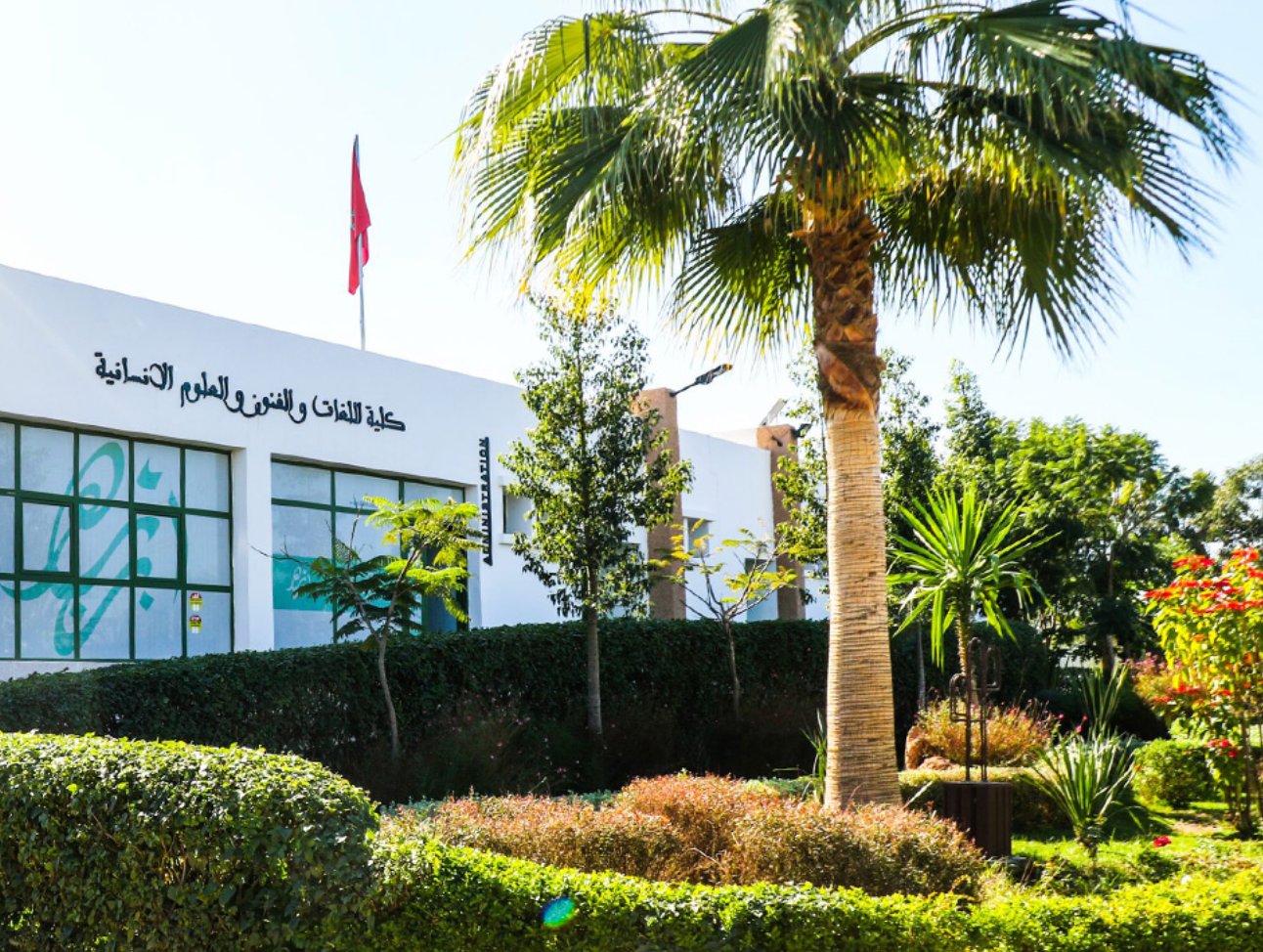
Location: Faculty of Languages, Arts and Human Sciences, Ibn Zohr University (Route Nationale N°10 cite d'Azrou, Agadir, Morocco) & online
Deadline for paper submissions: 20 February 2026 (extended)
Overview
The 2026 IMISCOE Forum is inspired by a shared vision to strengthen connections among migration researchers across Africa and Europe, in view of supporting the development of engaged networks for future collaborations and partnerships. It also aims to contribute to building a broader and more cohesive regional research agenda on migration, while consolidating exchanges between the IMISCOE community and scholars, institutions, and NGOs based in Africa. The Mediterranean is therefore understood not as a dividing line, but as a bridge facilitating intellectual exchange, collaborative knowledge production, and regionally grounded approaches to migration.
Rationale
The movement of people between Africa and Europe largely unfolds through the Mediterranean, which serves both as a historical crossroads and a contemporary space of connection. Although these mobilities have deep historical roots, their current scale, complexity, and geopolitical significance have intensified, attracting growing attention from policymakers, civil society organizations, and migration scholars. Yet, existing scholarship still struggles to capture the multidimensional and evolving nature of these human movements. One source of this analytical gap lies in the predominance of state-centric paradigms that often obscure the wider regional configurations within which mobility takes place.
This IMISCOE Forum seeks to address these limitations by exploring how research, practices, and decision-making can be decentralized to reduce inequalities, power asymmetries, and ideological or cultural biases. Its aim is to foster an equitable and inclusive Afro-European dialogue on migration that
is attentive to the lived realities of people on the move and grounded in regional knowledge production. A central objective is to highlight how the Mediterranean region—understood not as a boundary but as a bridge—can function as a space for intellectual exchange and collaborative research connecting Africa and Europe.
The Forum presents an opportunity to provide a comprehensive overview of current challenges and transformations, including the transnational nature of human mobility that transcends traditional “sending” and “receiving” categories. It will explore emerging theoretical perspectives and novel research categories that move beyond conventional frameworks. In doing so, the Forum emphasizes the need for critical, interdisciplinary, and collaborative approaches that reflect diverse regional experiences and voices.
Furthermore, the event will facilitate in-depth reflection on dominant narratives shaping relations between the Global North and Global South. Many of these narratives tend to overlook South–South mobilities, even though they represent a major component of global mobility. Recognizing and elevating these perspectives is essential for addressing blind spots in migration research and for bringing forward voices from African regions that remain underrepresented in global academic debates.
Ultimately, the 2026 IMISCOE Forum aims to identify research gaps, articulate new trajectories for future scholarship, and contribute to building a broader, more cohesive regional research agenda. By strengthening connections among researchers, universities, and NGOs across Africa, the Mediterranean, and Europe, the Forum aspires to support sustained collaboration, co-production of knowledge, and meaningful engagement among stakeholders. It is conceived as an open and inclusive platform that encourages free exchange and fosters diagnostic reflection and actionable regional cooperation. In addition to the panels and workshops to be created based on the submissions received, the Forum organizers also intend to provide meet-and-greet spaces, open dialogue sessions, special PhD talks, and spaces for exchanges with representatives from civil society, grassroots organizations, and policy institutions.
Forum Themes
We invite submissions for paper and workshop proposals that critically address the complexities of Afro-European migration across the Mediterranean space. We particularly welcome contributions that engage in comparative analyses, foreground African perspectives, and/or address the policy and ethical challenges common to both regions.
The Forum invites proposals addressing any of the following seven thematic areas outlined below:
1. Geopolitics, Bordering Regimes, and Human Rights:
This theme explores the intersection of security policies, human rights, and migration management. This includes the legal and ethical implications of European border externalization policies in North and West Africa, African mobility securitization, maritime governance, the role of regional security actors, as well as analyses of the rising prevalence of racism in both Africa and Europe.
2. Policy, Law, and Governance: Continental and National Reforms:
This theme engages with critical analyses of recent policy developments and their impact on Afro-European mobilities. This includes the EU’s New Pact on Migration and Asylum (2024), the New Pact for the Mediterranean (2025), and key African legal developments (e.g., Pan-African Parliament’s Model Law, ECOWAS’s Labour Migration Strategy, and national shifts like the repeal of anti-trafficking law in Niger, or expulsion intensification in Algeria, Tunisia, and Mauritania).
3. Climate Justice, Resource Conflict, and Environmental Displacement:
This theme seeks empirical, conceptual, and theoretical contributions on environmental mobility, specifically highlighting practices that exacerbate the climate crisis and displacement. We welcome research on carbon colonialism, land grabs, unsustainable resource extraction, the role of large European fishing fleets in disturbing ecological balances, and the displacement of local/indigenous populations in Africa due to carbon offset projects.
4. Diversification of Mobilities, New Corridors, and Understudied Populations:
With this theme, we invite submissions linked to the complex factors driving current migration flows to and from Africa, as well as the diversification of routes. This includes intra-African and Afro-European flows, overlooked corridors such as Africa–Gulf–Middle East, and the growing significance of Asian diasporas in Africa (e.g., Chinese, Indian, Lebanese). We also encourage work on understudied populations, such as seasonal agricultural workers, domestic workers, Western migrants and workers in multilateral organisations in Africa.
5. Governance of Asylum, Protection, and Return Policies:
This theme welcomes comparative research of legal frameworks and practices related to refugee status determination, protection gaps, and the effectiveness and ethical implications of return policies (forced and voluntary) across both African and European contexts.
6. Socioeconomic, Urban Transformations, and Inclusion:
This theme examines the socioeconomic impact of mobility on communities in both residence and origin countries. This includes the role of migrants in labour markets, formal and informal economies, and the urban transformations resulting from mobility across cities, small towns, and rural areas in Africa and Europe.
7. Historical Legacies, Decolonisation, and Critical Methodologies:
This theme invites submissions examining how colonial history, post-colonial relationships, and racialised discourses shape contemporary migration politics and integration. This includes the politics of inclusive memory and citizenship, as well as epistemological and ethical concerns in migration research (e.g., North-South research partnerships and efforts to decolonise knowledge production).
Submission and participation modalities
The Forum welcomes participants interested to share ideas, expertise, and experiences; build partnerships; and foster cooperation across Africa, the Mediterranean, and Europe. Emphasis is placed on dialogue, collaboration, and networking as essential tools for strengthening inclusive, impactful migration research.
There are no registration fees for this event. The Forum welcomes submissions from a wide range of disciplines (including, but not limited to, political science, sociology, anthropology, law, geography, history, economics) and diverse methodological traditions (encompassing quantitative, qualitative, and mixed-methods approaches).
1. Paper Submissions
Participants may submit individual papers presenting original research or preliminary findings. Paper submissions should be connected to any of the Forum themes highlighted above and should:
• Reflect regional perspectives and/or comparative approaches;
• Introduce innovative conceptual debates and/or original empirical analyses;
• Stimulate critical discussion and cross-continental dialogue.
Paper submissions should include the paper title, abstract (300 words max.) and the names, institutional affiliations, and contact details of the author(s).
2. Workshop Submissions
Workshops should be interactive and collaborative, focusing on research/publication projects, methodological debates, or opportunities for co-production and circulation of knowledge between academia, civil society, and policy actors. Workshop submissions should be connected to any of the Forum themes highlighted above and should:
• Ensure coherence and complementarity of contributions with potential for meaningful discussions around regional approaches and shared challenges;
• Ensure diversity in the workshop composition (by gender, race/ethnicity, career stages, disciplines, geographic representation including both Global North and South- including scholars and/or civil society representatives from Africa);
• Ideally also engage with research conducted in IMISCOE Standing Committees to present and debate regional approaches on migration.
Workshop submissions should include the workshop title, abstract (300 words max.) and the names, institutional affiliations, and contact details of all workshop participants (minimum 6 and maximum 10 participants per workshop).
For all submissions:
• Submit via email: please send your proposals to
• Please indicate in the text of the submission email whether participation will be on-site OR online. Let us know if your workshop/paper proposal is for on-site participation in Agadir OR for online participation. Please note that this Forum is not envisaged to be fully blended: sessions are expected to take place either fully on-site or fully online. A very limited number of hybrid sessions could potentially be accommodated, only in exceptional circumstances (health issues, visa restrictions, special care needs), when duly justified and notified prior to the finalisation of the registration process.
• Language: the working language of the Forum will be English, but contributions in Arabic and French are also welcome.
• Deadline for submissions: 20 February 2026 (extended). Applicants will be informed about the decisions regarding their submissions around late April 2026.