Deadline for submissions: 12 October 2026 (23:59 CEST)- Deadline extension!
Human rights are grounded in the claim of universality: that all humans are inherently entitled to dignity, protection, justice and fundamental freedoms. Yet, both historically and in the present, the category of the ‘human’ has been unevenly constructed and selectively applied. While human rights frameworks have provided important legal, institutional, and political tools for advancing protection and justice, they have also emerged through historically uneven trajectories, often shaped by Eurocentric assumptions and limited engagement with colonial realities. Migrants and minorities – particularly those who are undocumented, racialised, displaced, or come from formerly colonised contexts – have frequently been excluded from full recognition within these frameworks. At the same time, contemporary attacks on rights protections in areas such as asylum, deportation, family reunification, and mobility governance raise pressing concerns about the erosion of established safeguards. Across the globe, migration is increasingly shaped by tightening border regimes, selective mobility policies, and the persistence of racialised and socio-economic hierarchies.
The 2027 IMISCOE Annual Conference, United for Human Rights and Global Equity, invites critical and interdisciplinary engagement with these tensions. The event seeks to examine how migration and racism intersect with broader structures of inequality, including colonial legacies, capitalism, and geopolitical asymmetries. Migration is not only about movement across borders; it is a key arena in which inclusion, exclusion, and belonging are negotiated and institutionalised. We encourage contributions that examine how legal, political, and social frameworks shape access to human rights for migrants and their descendants, as well as how migration and racial regimes undermine, redefine or contest these rights.
Particular attention will be given to the conceptual and empirical limits of existing human rights practices: Under what conditions are people recognised as rights-bearing subjects? How has the 'human' in human rights been conceptualised over time and how has dehumanisation been resisted? How do we 'unite' in solidarity for human rights across geographical, racial, class, gender and sexualities divides? How do legal and policy regimes enable, constrain, or transform access to rights? In what ways might rights-based approaches obscure underlying inequalities, and where do they offer tools for contestation and change?
The conference aims to foster dialogue across disciplines, methodologies, perspectives, communities, and regions. It seeks to encourage exchange between academic research, policy debates and practice-based perspectives, including those of practitioners, civil society actors, and communities directly affected by migration and inequality. By centring inequality, racism, power, and resistance, it seeks to advance a more critical and inclusive understanding of human rights and to contribute to collective efforts toward global equity.
For the 24th IMISCOE Annual Conference in Brussels, we invite submissions of Individual Paper, Workshop, and Panel Proposals that critically examine the changing conditions of human rights for migrants and their descendants worldwide, including both the limitations of existing frameworks and contemporary challenges to rights protections. Contributions may adopt theoretical, empirical, or methodological approaches and may focus on any geographical context. Panels and workshops should be either fully in-person (with all participants at the venue) or fully online (with participants joining remotely). A very limited number of hybrid panels (up to a maximum of 5 sessions per time slot) could potentially be accommodated in exceptional circumstances (health issues, visa restrictions, special care needs), when duly justified and notified to the IMISCOE Network Office prior to the finalisation of the registration process.
Submissions for contributions are open from the 29th of June 2026.
Organizers
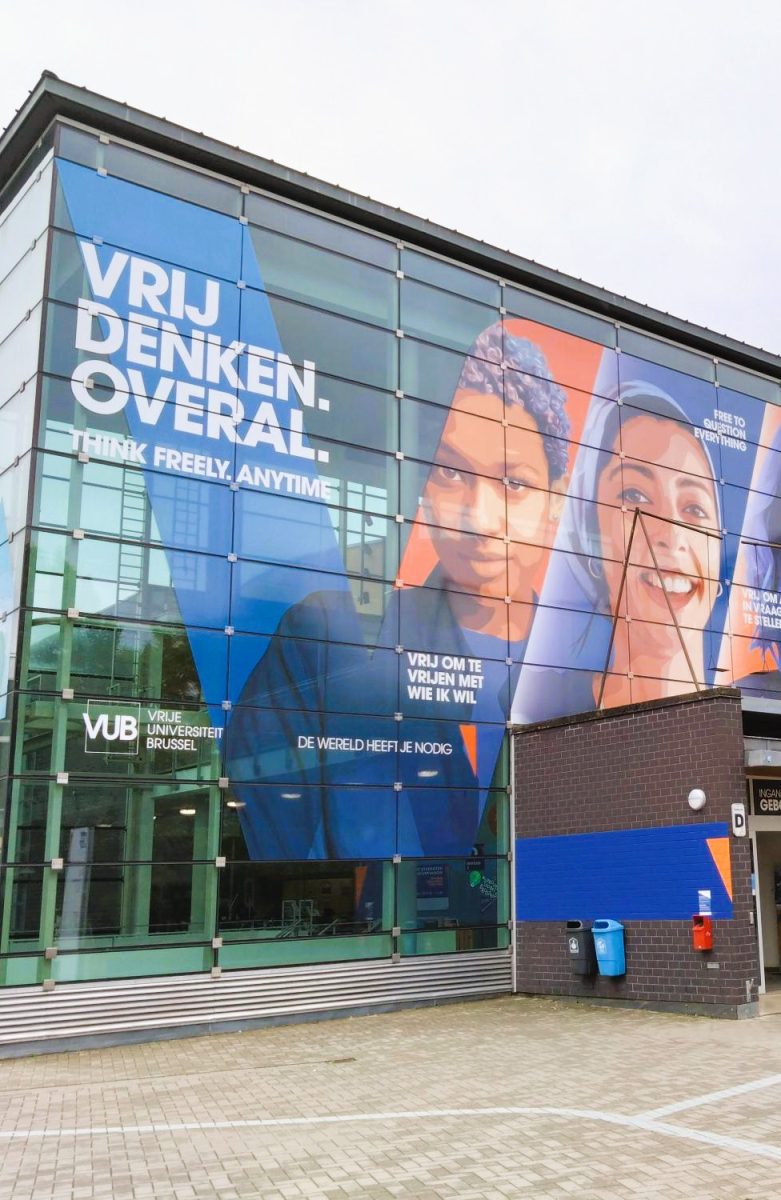
Brussels Institute for Social and Population Studies (BRISPO) and Brussels Interdisciplinary Research Centre on Migration and Minorities (BIRMM) of the Vrije Universiteit Brussels, Belgium
Individual Paper Proposals
Paper proposals should include a 250-word abstract and the name(s), affiliation(s), and contact details of the author(s). Individual papers will be thematically clustered into panels. We strongly encourage authors to highlight the conceptual and methodological novelty of their contribution.
Submit an individual paper proposal
Panel Proposals
Panel proposals should include a 250-word abstract of the theme of the panel, together with min 3/max 5 thematically consistent and related 250-word paper abstracts. Submissions should also include the names, affiliations and contact details of the chair(s), discussant(s) and author(s) of each paper.
Workshop Proposals
Proposals can also be submitted for workshops. This can be, for example, book workshops, policy workshops or roundtables focusing on specific topics, with the aim of discussing research or outlining future research agendas. Submissions for workshops should include a maximum of 400-word abstract as well as the names, affiliations and contact details of the organizer(s) and workshop participants (up to 10 participants, excluding the workshop chairs).
Paper, panel, and workshop proposals will have to be linked to a Specific IMISCOE Standing Committee or to the Open Section. Please check the description of all IMISCOE Standing Committees and select the one more aligned to the topic of your proposal. Please note that the Open Section should only be used for proposals which do not have a direct thematic link with any IMISCOE Standing Committee.
- SC Arts, Culture and Migrations
- SC Education and Social Inequality
- SC Families, Welfare, Care and the Life Course
- SC Forced Migration and Refugees
- SC Gender and Sexuality in Migration Research
- SC Methodological Approaches and Tools in Migration Research
- SC Migrant Transnationalism
- SC Migration, Citizenship and Political Participation
- SC Migration, Migrants and Labour Markets
- SC Migration Politics and Governance
- SC Race, Racism and Discrimination
- SC Reflexivities in Migration Studies
pdf Guidelines for abstract writting(133 KB)
Conditions/requirements
The deadline for submitting proposals is 12 October 2026 (23:59 CEST)- extended deadline. All submissions should be made online via this page (see the buttons above). When submitting proposals, applicants must choose their intended mode of participation: ON-SITE in Brussels or ONLINE. Please note that the 2027 Annual Conference is not envisaged to be fully blended: panels and workshops running throughout the conference days will be expected to take place either fully on-site or fully online. A very limited number of hybrid panels (up to a maximum of 5 sessions per timeslot) could potentially be accommodated in exceptional circumstances (health issues, visa restrictions, special care needs), when duly justified and notified to the IMISCOE Network Office prior to the finalization of the registration process. Applicants will be informed about the acceptance of their submission towards mid-end of January 2027. Applicants may be the lead presenter of only one accepted paper in the conference and may appear up to a maximum of 3 times in any other active role (as chair, discussant and/or workshop organizer/participant). The conference may be fully online if any other exceptional situation imposes it.
Conference registration fees
|
|
Participants from IMISCOE Member Institutes in EU/OECD Countries |
Participants from IMISCOE Member Institutes in non-EU/non-OECD Countries |
Participants from non-IMISCOE institutes in EU/OECD countries |
Participants from non-IMISCOE institutes in non-EU/non-OECD countries |
|
On-site participation: standard |
€230 |
€100 |
€360 |
€125 |
|
On-site participation: PhD students |
€150 |
€50 |
€200 |
€75 |
|
Online participation: standard |
€150 |
€50 |
€225 |
€65 |
|
Online participation: PhD students |
€95 |
€50 |
€145 |
€65 |